An Interview...
Dr. James J. Heckman – Emerging Economic Arguments for Investing in the Health of Our Children’s Learning

 Dr. James J. Heckman is the Henry Schultz Distinguished Service Professor of Economics at the University of Chicago. Professor Heckman is the recipient of the 2000 Nobel Prize in Economic Sciences, (with Daniel McFadden), the 2005 Jacob Mincer Award for Lifetime Achievement in Labor Economics, the 2005 University College Dublin Ulysses Medal, and the 2005 Aigner award from the Journal of Econometrics. He is the author of: Inequality in America: What Role for Human Capital Policies?, numerous other books and hundreds of technical articles related to economics. Additional bio info
In addition to his sheer mind power, what most interested us about Dr. Heckman is the direction of his work. He is developing compelling economic models and ROI arguments for investing in early childhood learning.
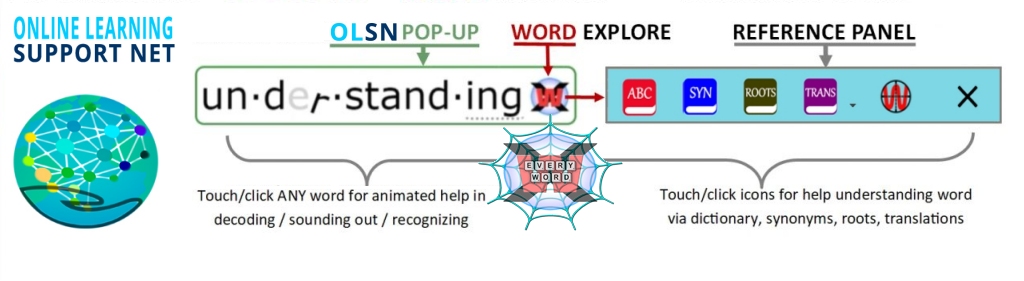 Note: Remember to click on any word on this page to experience the next evolutionary step in technology supported reading.
-----------------------------
The Technology of Skill Formation:
David Boulton: I am not an economist, but as someone whose life’s work is about ‘stewarding the health of children’s learning’, I’m really taken with your ‘Productivity Argument for Investing in Young Children.’
Dr. James Heckman: This is something that I am very passionate about, but I’m passionate because I believe there’s a scientific basis here and I just want to sort out the good arguments and the bad ones. I’m very, very actively engaged. As an economist, I’m primarily interested in what we call the technology of skill formation. But what that comes down to is really exactly what you are calling ‘affect’ and its relationship to cognition – how it is and where it is we should intervene, and what’s the best evidence based on the various studies. They haven’t been fully synthesized and that’s what I’m in the middle of doing.
David Boulton: I want to help in any way I can with what you’re doing. Our society needs to have an appreciation of the capital value of learning – it doesn’t ‘get it’ right now.
Dr. James Heckman: Exactly. I think it’s amazing how much we disregard early childhood, and the family structure. What I’ve been getting at, and you saw on the Committee of Economic Development paper, The Productivity Argument for Investing in Young Children paper. What I want to put together, more systematically, is the structure of how the disadvantaged family – just what a disadvantaged family does, what its harm is, what the environment is. Right now, so much of the discussion on economics and in many other areas, World Bank, it doesn’t matter where, is just on income. As though if we give the family another $1,000 – that’s it. And that’s nuts.
It has nothing to do with it. Now, maybe the family, in its wisdom, could spend the income. But I think you’re absolutely right, there’s a huge amount of ignorance about what to do and where to focus. See, economists have this little bit of schizophrenia about this process. Namely, on the one hand, if you look at bond markets in New York, we tend to think they work very smoothly. In fact, they process information quickly, there are billions of dollars to be made, and a mistake will cost you your job and your fortune. Those are kind of documented decisions.
But raising a kid is not that at all. You’re just learning for the first time. Almost everybody is an amateur. And even when they get to be really proficient, the kids have gone. They just know the mistakes. I remember when my kids were born, I was reading McVicker Hunt, I was reading all these books by Piaget that I thought I should really learn, and then I gave up. I said, first of all, there are a lot of disagreements here in this community and I don’t know what to do. I’ve got an idea of what to do. The kids have turned out okay so far, so I’m not complaining, but I mean, the fact is there really is a lot more to be learned about the skill process.
David Boulton: Yes.
Family Effects:
David Boulton: I’m surprised that so few of the people (that I encounter) in education seem to understand that most of the ‘effects’ that correlate most strongly with ‘student performance’ are happening or caused outside of school.
Dr. James Heckman: Well, you know it’s a funny thing. I’m not sure they don’t understand that. I think there are a lot of institutions in place that maybe divert their attention away from it. I think that may be a better way to describe that.
David Boulton: Okay. And, just in terms of my personal interactions with people in education, when I bring this up it’s like a revelation to them.
Dr. James Heckman: Well, I think there are a lot of institutional reasons why people don’t get this. Don’t forget the way that a lot of these topics are discussed. You have a feature, which is that a lot of these people discussing it are either academics or else they are people who are committed in some way or other to support a particular…
David Boulton: Ideology or methodology.
Dr. James Heckman: Or institution as far as a life cycle process. Academics largely have no reality check. I mean, common sense, as you well know, is probably in short supply. This is an argument that’s actually very commonsensical. But what happens is that people collect data, they work on a certain problem, they become enormously absorbed into a certain mindset and then they lose the ability to think more broadly or really understand what we’ve been learning from the developmental processes of the last twenty years or so, and even longer going back to the Coleman Report.
There are a lot of signs that point in this direction. I think anybody who’s got common sense would accept it.
The Emerging Convergence:
David Boulton: Well, there is a convergence that’s happening that supports this which is coming ‘bottoms up’ from the neurosciences about how important the early years are to the infrastructure forming in the brain.
Dr. James Heckman: It is, but you’ve got to be careful. I’m very interested in the neuroscience evidence. I’m writing a paper with a primatologist and a neuroscientist exactly exploring this link; a guy named Eric Knudsen who happens to be a neuroscientist at Stanford and a woman named Judy Cameron who is a primatologist at the Oregon Regional Primate Research Center. And there is evidence from both the neuroscience and from the primatology communities that is relevant. But you have to be careful. These are hints, they’re indications. We don’t have anything really hard in the sense that a neuroscientist would call “hard” to a body as large as a human being, to an organism as complicated as a person. Partly because no experiments have been done. And secondly, the scale of organizing up from the cellular responses that are studied by a lot of neuroscientists. Serial synaptic responses are quite different from what we see in the organization of human thinking and behavior. Yeah, the hints are there. I think the evidence is there, I do. I just think you have to be really careful in sorting through that.
David Boulton: I appreciate the distinction. The neuroscience I was referring to is the neuroscience that’s showing what allows a brain to develop the kinds of infrastructure it needs to process, for example, in the case of reading, this artificially confusing code. There’s a kind of growth that has to happen or learning that has to happen that we can see is related to the kind of language environment that the children are developing in.
Dr. James Heckman: Correct. Oh, absolutely. No question about that.
Meaningful Differences:
David Boulton: And that neuroscience connects up with other types of research. For example, the Hart-Risley work.
Dr. James Heckman: I’ve heard of this work, but go ahead.
David Boulton: Basically it showed that there was a thirty plus million word exposure difference in the amount of talk children experienced by the time they were four years old.
Dr. James Heckman: Yes, I’ve heard of this.
David Boulton: And a consequence of this is a radical difference in the exercise environment that the brain needs to create the kind of differentiations in language that are critical for taking off in reading.
Dr. James Heckman: Exactly.
David Boulton: So, there is a connection between the neuroscience outside of reading with respect to what facilitates the neurological growth and differentiation needed to deal with complexity in sound and so forth. And then there are language studies, reading research, family effects, and economic pointers that are all kind of converging here.
Dr. James Heckman: Oh, I agree. And that’s what I was trying to get with that paper. It’s crude, and I think the whole synthesis right now is crude, but it’s very suggestive and I do believe that they all point in the same way. Absolutely.
Take the language question, which very much fascinates me. See the dual sides of the language problem are that not only do we know that early environments, in the sense of early access to enriched environments, whether from the parents or from some other source, essentially promote language skills. But we also know that this process, if not put in place, is very difficult to remedy.
Recently, I’ve been studying the effects of programs that are designed to solve things like adult illiteracy and adult innumeracy. But there are problems. First of all, sometimes these are prison populations, and sometimes these are problem populations outside of prison. For example, government training programs and programs that are focused on disadvantaged populations like charity groups and the like.
What’s interesting is that vocabulary can be acquired over the whole life cycle. One can learn words. But syntax, language structure, certain modes of expression and the like, really do get acquired at an early age. An extreme example is the question of acquiring a language without an accent. We know there is a critical period for that – up to age eleven.
David Boulton: Laura-Ann Petitto and others have done some really interesting work on bilingual brains that supports and also adds to this. Pettito and Kevin Dunbar did a paper that came out in November 2004 called “New Findings from Educational Neuroscience on Bilingual Brains, Scientific Brains and the Educated Mind.”
Emotion and Cognition:
David Boulton: So, we’re tracking in similar terrains. I’m really interested in both the cognitive science / neuroscience side, and the affective side because, as I’m sure you’re aware in your trek into this, there’s another dimension to all this, which is how does the developing child feel about how well they’re learning.
Dr. James Heckman: That’s the part that is really mostly ignored in everything of social science as far as I can see.
David Boulton: But it has fundamental cognitive implications.
Dr. James Heckman: Oh, absolutely.
David Boulton: It’s not just a ‘wouldn’t it be nice’ emotional surface.
Dr. James Heckman: I’ve seen it argued both ways. We had a conference here [in Chicago] last September and there was a group from Montreal that came in, including Richard Tremblay. He’s a psychologist who works a lot on crime and the origins of criminality. He has long-term longitudinal studies where he looks at aggressive behavior at different stages. So, it’s not just crime, it’s really a whole series of self-control measures and measures of violence, of what we would think of as affective control.
He and some of his group argued that yes, there were very important interactions, but he also thought that there was an interaction the other way. So, there certainly is a question about motivation and the like effecting learning, big time. So, that’s how I interpret the Perry Preschool and a lot of the evidence on early intervention. It seems that they do affect primarily the ability of the child to sort of concentrate, to focus, to encourage, to provide self-discipline and motivation.
But what they were arguing was that what they were calling the “executive function” was partly prompted by intelligence or what you would think of as the cognitive. So, it seems like a two-way flow here. You were describing it as one way and I think I would agree that’s where the primary evidence lies, although even that evidence isn’t out in the community as far as I can see.
David Boulton: Nobody has yet correlated cognitive processing stutters with affect-emotion triggering at the high-speed frequency level that is implicate here.
Dr. James Heckman: Yes. That would be amazingly interesting to see. Is anybody working on that?
David Boulton: I’m trying to get some people interested in working on that, suggesting using eye tracking and ERP and EEG and other methods in co-registered ways to show the effect of affective turbulence on cognitive entrainment and engagement.
Dr. James Heckman: That would be amazing.
Ability and Behavior:
Dr. James Heckman: I’m writing a paper now, which is crude, it’s limited by the kind of data that a lot of social scientists have, but it’s very suggestive. It’s a study that grew out of what looked like a very minor project but has become one of my passions over the last decade – the GED program. One of the big findings that came out about three to four years ago that caused me to stop in my tracks a little bit was that the GEDs were actually just about as smart as high school graduates who didn’t go on to college.
So, in terms of all the measures of cognitive abilities, especially the pure measures of cognition, they were as smart as, if not smarter than, the high school graduates who didn’t go on to college or succeed in college. I should say that about half of all the GED’s go on to college. Actually it’s more like sixty percent, but only about three or four percent actually graduate even two-year college. That’s another story.
What’s interesting is that we found these big gaps not in the ability as measured but in the behavior, in the sense that we found much more indications of poor behavior: hitting people, punching people, even back when the kids were six years old. And tracking them through the lifetime there seemed to be very interesting traits which caused these people to basically never get jobs that are stable. Never finish anything. They are just unstable.
David Boulton: Essentially, they can’t engage in anything in a stable way.
Dr. James Heckman: Exactly, so they can’t finish anything. So, they go in the army and they do not even finish basic training. They get thrown out. They tend to be more violent, too. The Marines, interestingly enough, wouldn’t take them. And the reason was that the GEDs they got were too violent and lacked self-control. They couldn’t take the platoon discipline.
David Boulton: Have you read any of Sylvan Tomkins or Donald Nathanson’s work on affect theory?
Dr. James Heckman: No, but this is really central. We’re actually showing now that a big chunk of this two-way interaction and for these various measures is what we call non-cognitive abilities. Which are basically measures of time preference, self-control, and discipline. They’re not the same.
David Boulton: No, but they can be seriously harmed by how we learn cognitively.
Dr. James Heckman: Exactly. But is that well established?
David Boulton: Well, that’s part of what is converging right now. Take, for example, the shame aversion that children feel when they can’t stay in the frustration of learning to read.
Dr. James Heckman: Yes.
David Boulton: It becomes an aversion to reading. And this aversion to reading is basically learning disabling to the process of learning to read, and potentially to their learning in general.
Dr. James Heckman: But is it the aversion or is it the lack of the ability that causes the shame? Which then causes the kid…
David Boulton: It’s a downward spiral because the less the experience, the more that they “frustrate out” in the confusion.
First of all, in the case of reading, we’re talking about an artificial (to our organism) maze of confusions. And the confusions are frustratingly difficult to learn through for a lot of reasons. Children’s primary response to failure in reading, according to National Institute of Child Health and Human Development and others, is to take it as an indication of something wrong with them, to blame themselves. So, they feel shame in relation to this confusion. (see “Shame Stories”)
Now, if they’ve got good oral language abilities and processing speed and other variables we could talk about at the neuro-substrate level, many of them will pop through that threshold of confusion and start to get positive experiences of reading that provide them with learning traction and helps them bootstrap themselves up into doing better.
Those that can’t learn their way through the confusion start to become self-conscious about it and the movement into self-consciousness diminishes their brains capacity to learn through the confusion. They ‘stutter up’ at both the processing and emotional levels and that leads to a downward spiral.
Dr. James Heckman: Well, is this confined only to children though? What about adult literacy programs?
David Boulton: No, I think it’s across the board. Unfortunately, when you get to adults, and we’ve interviewed a number of adults and talked to the presidents of ProLiteracy and the National Center for Family Literacy and others, what we find is that one the biggest things working against them learning now is how they feel about it.
Dr. James Heckman: What do you mean?
David Boulton: It triggers so much shame.
Dr. James Heckman: Right, I understand. They’re afraid to admit that they’re illiterate.
David Boulton: Or even if they will admit their feelings when trying to learn, the frustration and the long time of shame associated with that frustration is actually exacerbating the learning difficulty.
Dr. James Heckman: There’s always the question here: which comes first? My own sister has a child who is really substantially mentally impaired. He is now in his thirties. I think he attained a third or fourth grade level finally, but in the course of his education, you could see, and I was told this was fairly typical, deep frustration because he was in classes and he could see that other people were learning. He wasn’t an idiot in any sense. He could understand and he could also understand when he didn’t understand and the comparison was inevitable. And so what was put in place was definitely a psychological process. But it was caused by an initial learning disability. That’s the question. How do you sort those out?
Learning Disabilities:
David Boulton: Let’s talk about learning disabilities. From my conversations with James Wendorf, the Director for the National Center for Learning Disabilities, with Reid Lyon at the National Institute of Child Health and Human Development, and with Sally Shaywitz in the neuroscience/dyslexia field, there seems to be a general consensus that the amount of neurobiologically innate learning disabilities is about five to six percent.
Dr. James Heckman: Okay.
David Boulton: Yet, the amount of people struggling with reading, depending on where you cut the line between basic and proficiency, if you take the position, as we do, that anybody who is below proficiency in reading is being harmed by not having made it through, then there’s an enormously greater dimension of the population effected by the reading problem and being in various ways disabled in their learning because of it, than because of innate neuro-biological issues.
Research from this same group indicates that ninety-five percent of the kids could learn if we met them the right way in terms of what they need as they’re climbing up the stairway through the reading challenge.
So, implicitly, ninety-five percent is within the scope of learning. Whatever percentage of the population that’s having trouble with reading, ninety-five percent of that, at least or in that zone, are in trouble because their learning needs haven’t been met.
Dr. James Heckman: I can believe that. It’s a very important question you’re raising. I deeply wish we could get a handle on it more than we do. There are all these correlates though. I mean, if you were to say children from homes that are broken homes, children from homes where the mothers is fourteen, children from homes where you get bad environments by different standards, almost always are the ones who are over-represented in the problem pools and that are going to prison, and so on and so forth. I think we would agree on that.
David Boulton: Absolutely. And what’s most commonly implicate is that these different environments are unhealthy learning environments. They are unhealthy in terms of how the child is coming into – learning into – their own learning.
Dr. James Heckman: Right, I understand. I think that’s extremely important. But we do know that we have a limited set of these interventions where long-term follow-up has occurred. They have not analyzed in a kind of systematic way to look at something as fine grained as what you are talking about. But, I’m just wondering, what do we know in that context about the remedies that might be put in place for kids who’s mother is fourteen and maybe even abusive? We want to foster the right kind of emotional framework for the kids to learn.
David Boulton: Clearly, I think we can say the main thing we need to do is to reduce the confusion and create an emotionally safe place for them to learn through the confusion.
Dr. James Heckman: Right. Is that so easy to do though?
Stewarding Healthy Learning:
David Boulton: No, it’s not. But I think it starts with what you’re trying to do in a way. It starts with recognizing the fundamental, profound and capital value of ‘stewarding the health of our children’s learning.’
Dr. James Heckman: I agree. I think everything points in that direction.
David Boulton: Which is deeper and more radiant than saying we’re about this particular thing or that particular thing.
Dr. James Heckman: I agree. I think you want to get to a basic set of principals and this is clearly it.
So, if you look at the later interventions, even in the adolescent years, they do seem to have some effect. They have some effect, not a lot, but they do. I mean, if you take a thirteen year old and counsel the kid, the kid is not as likely to drop out of school, more likely to read, more likely to achieve, grades go up and on and on. That’s the interesting thing. It seems like the processes that we’re talking about that are, I think, largely governed by the prefrontal cortex, they seem to mature at a later age as I understand the brain science. That means there’s some scope for remediation that’s not as present in things like raw IQ. Again, I’m telling you things you probably already know and have known.
David Boulton: I’m appreciating the dialogue and the opportunity to tune in to being able to communicate well. I really appreciate where you’re coming from.
Adult Literacy:
Dr. James Heckman: This is extremely interesting to me. You mentioned something about ProLiteracy. I know some of these groups, but do these groups like ProLiteracy actually look at adult literacy programs, which ones work and which ones don’t work? I’ve been looking left and right for studies in adult literacy and I found a few programs. I found one study of Alabama prisoners and job training studies scattered here and there, but not a body of work so far.
David Boulton: I have had conversations with Robert Wedgeworth, the President of ProLiteracy, which is the world’s largest adult literacy organization, and they have a lot of interesting research. I’m not sure what kind of research would be most helpful to you.
Dr. James Heckman: Well, I’m thinking about the evaluation of a literacy program. Take an adult, take a late teenager, eighteen, nineteen, essentially illiterate. Say, level one – I don’t know if you know these various levels…
David Boulton: Yes, the different levels used by NAAL.
Dr. James Heckman: Exactly. I would like very much to find out more about these adult literacy studies. I review the evidence on a regular basis and I scour it daily actually and generate some of my own, but I’m not as plugged into some of these other organizations as I should be. I know there must be more work than I’m aware of on this whole range of issues. I haven’t seen it all, especially on adult literacy. We’ve had graduate students researching for the last few months. I sent the work out through my connections, which aren’t too limited, to get evidence on adult literacy, for example, or even literacy programs for early teenagers and haven’t been able to succeed. I’d be very curious if I could get any leads.
David Boulton: I’m making notes and I will look into that for you. I mentioned ProLiteracy, I also work with the National Center for Family Literacy (NCFL) which comes at things differently. The NCFL is trying to turn up the language and literacy learning inside families. They’re trying to help adults and children learn together.
I am also aware of a Goodwill program in Kentucky that, rather than focusing on literacy as an outcome, finds out where the adult would like to go in life, what’s a reasonable attainable next step in life, and then helps the adult develop a stairway between where they are and where they want to go that helps them through literacy/math as needed to do that.
Dr. James Heckman: That would be interesting to know. How effective are these programs?
David Boulton: My access to it is from interviewing some people that have gone through it and the person that is leading it. I really like what I see, but I don’t have any data about long term effectiveness.
With a few exceptions, I think that an awful lot of work in literacy, however, is in the shadow of some mass ignorance about what reading is.
Dr. James Heckman: Right.
David Boulton: And so a lot of what’s going on, it seems to me, is intervening the wrong way at the wrong times.
Dr. James Heckman: I think so, but there’ s not a very clear understanding to my knowledge of language skill acquisition. I mean, there are books written on it, but it doesn’t seem to effect much of the public policy discussion, does it?
David Boulton: No, although the focus on reading is coming to such a point with so many different converging tracks of information that it’s possible that we’re going to be able to register more planes of data and get some action here.
Reading:
Dr. James Heckman: Well, that’ll be interesting. Do you have any particular synthesis in mind?
David Boulton: Well, I think that some of the most important developments in reading science go back to the interactive compensatory model of Keith Stanovichand the verbal efficiency theory of Charles Perfetti. Both basically say: there are many different levels that have to operate concurrently and that the base level, where the code is turned into sound representations, has to result in word recognitions flowing above a certain rate for reading to work. If it takes too long to work through the processing involved at that point, then it’s burning too many brain resources for comprehension to sustain engagement.
These layers all nest in each other.
It’s really clear that how we help kids and adults get through the confusions and ambiguities associated with the low-level code processing tasks creates brain infrastructure.
It all has to happen faster than thought. The brain must translate the code into sounds fast enough to create a virtually heard or spoken stream that flows like language. So, this virtual reality projector – this artificial intelligence structure – that has to grow in the brain in order to process the code, if it doesn’t grow right, either because of innate neuro-biological issues, shame, or any number of other things during its early stages of development; if it doesn’t form right, then the whole inner assembly process doesn’t work efficiently enough for reading to take off.
Dr. James Heckman: What’s the best single reference on this? What’s the best set of references where we have this synthesized in the way that you just put it?
David Boulton: You’d have to go to a lot of places to get it the way I just explained it. Although that’s what we’re trying to do is to draw that together.
Dr. James Heckman: I would be very interested in reading it when you do it or finding the links to the various work.
David Boulton: Well, a lot of those are on the site now. Even our home page is a kind of quick tour through here, although it does not go as deeply into the neurological and cognitive dimensions. However, I am engaged in some dialogues with neuroscientists where we’re actually exploring this together and we’re trying to get the work that’s being done in a couple of different research centers to correlate together in a way that better reveals what I’m describing here.
So, at the root of it for me, again, is that we’re talking about this: nothing is more practical or profound than ‘stewarding the health of the children’s learning.’It’s just connected to everything. Yet, unconscious to us, children are growing up learning disabled in various ways because of our ignorance about what learning is.
Dr. James Heckman: I agree with that. But do we know enough about the learning process and the specifics of what’s required for an individual child to devise really effective interventions? Take a kid who just walks in off the street or is brought in off the street.
David Boulton: I think we could do a radically better job than we’re doing now. Unfortunately, we’re heading in a direction where, if we’re not careful, we’re going to get an amplification of the digital divide. Kids that grow up in environments that have the money and time and computers and other things to help them have a big advantage over those that don’t.
Dr. James Heckman: No question. I think the technology is moving in a direction toward making the relatively poor more disadvantaged.
David Boulton: Which is really scary.
Dr. James Heckman: You’ve seen these studies, like Suzanne M. Bianchi’s at the University of Maryland, that find that more educated women, over the last twenty years because of the emphasis on the early years, have actually been spending more time with their kids even though they are working, they are spending more time on child development. But less educated women show no such trend. So, you’re getting basically a growth in this divide, as you call it, that is leading to some huge, huge deficits or relative deficits. Some huge gains at the top, which is good, but with nothing at the bottom.
David Boulton: Yes, it’s tragic. It’s only in the past few years that organizations like Head Start, for example, have started to recognize that it’s important to encourage parents to be more verbally engaging with their children.
Dr. James Heckman: Well, you know the early interventions, the Perry Preschool Project and especially the Abecedarian Project, have had this aspect of trying to educate the child’s parents as part of the intervention. In fact, one version of Abecedarian that’s most effective is one that essentially teaches the child’s parents exactly the task that you’re talking about.
The Move Towards Evidence Based Education:
David Boulton: Another great thing that intersects here is a movement happening in education trying to move it into becoming more evidence and science based and, in particular, to operate like or model the way medicine was transformed in the early twentieth century.
Dr. James Heckman: So, what form is that taking?
David Boulton: Well, it seems like there’s a big debate in this space between those that feel that the rigor of becoming evidence based and case based in determining what we’re doing is leading to less harm to the population of children as a whole because we’re reigning in all kinds of idiosyncratic teacher behavior.
On the other hand, we’ve got teachers who feel like they’re becoming robotic extensions of the impersonal political-educational machinery.
First-Person Learners:
David Boulton: My bigger concern is that, in almost all cases, we’re training teachers not to be first-person learners.
Dr. James Heckman: Well, I think there’s a real trade off there and I don’t think there has to be a necessary conflict. You could have general principals without having to constrain the teachers from dealing with what the teacher sees.
David Boulton: Well, that depends on what latitudes are in the protocol. I mean, in the case of Direct Instruction, where the scripts are really tight, there is comparatively little room for teachers to creatively modulate the program.
Dr. James Heckman: I understand. You want enough flexibility to adapt to the individual child, I would guess.
David Boulton: Yes, and more than anything I think you want to help teachers become excited scientists in their own right; first-person learners, interested in learning about helping their children through the challenges they’re experiencing.
Dr. James Heckman: I would think so. Is this any different though between Catholic schools and public schools and private schools? My impression is the elite private schools obviously are encouraging a lot of individual learning. But if you go down to, for example, Catholic schools, is there any less of these uniform application of rules in the Catholic schools?
David Boulton: I think it’s just happening in different contexts, but overall we’re still talking about one form or another of conscription to a more or less rigid or absolutist model of how to do things.
Dr. James Heckman: Right.
Above All Else, Do No Harm:
David Boulton: So, they’re all variations within a spectrum of rigid systems. But if we say we’re moving toward medicine, I think the best thing we can learn from medicine is its first principle: above all else, do no harm.
Dr. James Heckman: Right.
David Boulton: So, let’s concern ourselves with the health of learning, and use ‘above all else do no harm’ as our first principle. I mean, what seems to throttle the children is that the health of their learning is being harmed because we’re ignorant of what is harming it.
Dr. James Heckman: Oh, absolutely. I don’t think we have enough knowledge yet about how the process starts, how it really goes. My impression of education has been that there are all these fads and algorithms, if you will, about how to raise a kid and they capture the fancy and they never receive universal acclaim. Some of them do, but it’s not much based on evidence. It’s kind of visions of child development, and with it then, a lot of harm. I think it suppresses this idea of one on one developing the kid. But boy, most parents are not very well equipped for these kinds of child development processes.
David Boulton: But they don’t have to be knowledge experts if they’re turned on to learning.
Dr. James Heckman: I understand that. It’s truly the scope.
So, what is your role in this? I’m just curious. You’re synthesizing this evidence?
David Boulton: I’m interested in, first of all, making the value case for ‘stewarding the health of children’s learning,’ and in particular doing that through the lens or portal of reading because reading is this place where children’s early learning really collides with the infrastructure of the artificial parts of the way the world works.
Dr. James Heckman: Yes.
David Boulton: It has such an enormous effect and it has such a strong correspondence and correlation with so many things, as you know well in your work. Learning to read is clearly an artificially confusing experience of a kind not ever before experienced by a child until they hit it. Reading hasn’t been around long enough for there to be any evolutionary instantiation in support of it.
Dr. James Heckman: Right.
David Boulton: Right, so they’re kind of alone in a certain way, undergoing faster than they can be aware of, unconscious confusion, and how well they come through that seriously effects the shape of themselves inside.
Dr. James Heckman: Absolutely. I wish I knew that more. I say absolutely, it sounds like it is what I mean. To really get into that developmental process would be amazingly useful, I think, to really understand what causes reading success or failure.
NICHD Research:
Dr. James Heckman: Are there good longitudinal studies of the development of reading skills across children from different socio-economic backgrounds, different environments even within those backgrounds?
David Boulton: Yes, we’ve got a lot of it. It’s inside a particular box or frame of reference in interpreting what the challenge is. But inside the structure that we use to slice that field up with, we’ve got a lot of data on hundreds of thousands of kids in various socio-economic situations and with various other correlates and can plot them out in reading. This is one of the things that Reid Lyon at the National Institute of Child Health and Development has been working on for quite a while.
Dr. James Heckman: Does he have a book on this?
David Boulton: No, he doesn’t have a book on it, but if that’s something that you’re interested in there’s a lot of data and there is a link to his whole library. There’s also an interview with him on our website.
One of the things that we’ve done, back to the question that you asked me, is that we’ve tried to talk with people that represent the pinnacle of expertise in learning in these different dimensions and disciplines that all are intersecting here. In part, we’re trying to synthesize something that’s more generally understandable to people than the fragments as they are now. And part of the job is cross-pollinating.
Primate Brains and The Symbolic Species:
Dr. James Heckman: There’s definitely room for cross-pollination. I think this is an area that is converging. That’s why this work with Knudsen and Cameron for me is so fascinating, because I’m actually able to digest a lot of this work in primatology and brain science. The primatology work is exploring randomized trials on chimpanzee herds where mothers are taken away from the chimpanzee. The surrogate mothers are more or less controlled, they’re taken away at different ages and you can then look at the emotional development and subsequent behavioral pattern of the young chimpanzees. And you get huge correlating effects. It’s surprising, but it’s interesting because there seems to be some parallel, some affinity with, proximity with the human. And that creates a very interesting possibility here for understanding how this process gets developed.
David Boulton: Yes, it does. Due to the interest that you just outlined, you may enjoy the work of Terrence Deacon. He’s a cognitive anthropologist with a biological and neurological ground and he wrote a book called The Symbolic Species. There’s an interview with Deacon on the Children of the Code website that links off to his universe.
He’s looking at the development of symbol processing in the brain. His basic point is that the brain has co-evolved with language. Language has become a reality, an environment in and of itself that the brain is now co-evolving with.
Dr. James Heckman: Yes.
David Boulton: And, that to understand the brain, you have to understand language. And to understand language, you have to understand how the brain can create language and what its limitations in doing so are.
Dr. James Heckman: It’s an intriguing idea. I’m sure it’s right. But what’s the evidence on that?
David Boulton: His book is full of research that supports that particular perspective.
Dr. James Heckman: Well, it makes sense. The question is there’s a lot of ambiguity about when we think spoken language was first uttered. I’ve heard ranges going from 70,000 years, back to half a million years.
David Boulton: Right, and he would argue probably more for the latter, citing evidence like we can be born with literally half a brain and still acquire language. That language has become so ‘selected for’ – we’ve become so adapted for it – that even a really damaged brain will find its way to language in a way that no other brain on the planet can. On the other hand, as I’m sure you’re aware of, the anthropological evidence is more like 100,000 years as far as the face structure and throat and all of that.
Dr. James Heckman: Yes, that’s what I’ve heard – 70,000 to 100,000 years.
David Boulton: Any way you look at it, there is both a long-term, species-level biological foundation and an individual real-time somatic feedback process involved in bringing us into spoken language.
Dr. James Heckman: I’m sure there is.
David Boulton: There’s no such feedback, there’s no such felt sense feedback loop in the virtual, artificial process of learning to read.
Dr. James Heckman: That’s not surprising now is it?
Back to Reading:
David Boulton: No, it’s not surprising. But what it means is that the kind of natural organic learning that we evolved to do so well, and that brought forth human language and the richness that goes with language, is of a different order altogether than the kind of literate mind learning, the infrastructure that has to grow or be learned in order to process this external technology of writing. And it is understanding the differences between those two that is really fundamental here.
Dr. James Heckman: And so what have you concluded about this exploration?
David Boulton: I think that, again, it connects up back to what we started with. I think a significant number, if not the majority, of our children are growing up to significant degrees feeling like there’s something wrong with their minds because they can’t overcome or can’t learn their way through the confusions they experience in the family and educational environments they live and learn in. And that this is injuring their cognitive development and their emotional health. And, it connects up with reading scores and other educational scores, as well as to the social pathologies and social economic costs that we’ve been talking about.
Another important component is that how well children come through this artificially confusing barrier is largely dependant on what formed in their brains, for the most part, before they were four years old.
National Early Literacy Panel:
David Boulton: I have had a number of conversations with Dr. Timothy Shanahan, who is a member of the National Reading Panel, the President-elect of the International Reading Association, the Chair of the National Literacy Panel and the Chair of the National Early Literacy Panel (NELP), which is gathering converging evidence on what we know about how literacy develops in young children.
He had long been aware of the evidence about oral language exposure differences in young children, but there didn’t seem to be a tight correlation between that information coming from the zero to four language related assessments and kindergarten, first grade, and second grade, reading. But in the NELP research summaries they found a strong correlation with third and fourth grade.
Dr. James Heckman: I see.
David Boulton: So, in other words, the initial reading challenges that kids experience and the complexity of reading that they’re pressured into at that stage is insufficient to reveal the gap in their core language development.
Dr. James Heckman: Where do I see this paper? Where can I find this evidence? I’m curious because I’d like to read this evidence. This sounds very relevant.
David Boulton: Shanahan and NELP are in the process of compiling a report that is a synthesis of all this research. What I could do is send you a copy of my conversation with him about this point.
Dr. James Heckman: If you could, that would be extremely interesting. So, he has collected data, but these data are not yet out in the public domain.
David Boulton: I think they are out in the public domain, they just haven’t been coalesced and sorted in ways that reveal this correspondence. For instance, the Hart-Risley work showed that the vocabulary exposure difference in four year olds had a .77 correspondence with intelligence test and with reading performance in the third grade.
Dr. James Heckman: Did that somehow control for what you might think of as the IQ?
David Boulton: It correlated with IQ.
Dr. James Heckman: Oh, this is fantastic. See, I’m interviewing you now.
David Boulton: We’re learning together and that’s what is great.
Dr. James Heckman: I believe that there are certain kinds of relationships that we can establish in economics and using social science methods. But at the core, some of these cognitive processes are not well understood and I think we really have to draw heavily on other subjects to get this into a really consistent development of ideas. I’m completely in favor and I’d love to see this studied.
David Boulton: The point is that Hart and Risley’s work establishes this correspondence between early language exposure, intelligence and later reading ability. But for a while it was not accepted in certain early literacy reading communities because they’re looking at the kindergarten and first grade as being the next stage of where the Risley work should leave off. But Shanahan and others have come in and said there is a powerfully predictive relationship between early language exposure and reading test scores in third and fourth grade.
Dr. James Heckman: But why not first and second grade?
David Boulton: Because the kinds of challenges that kids are going through in first and second grade aren’t taxing their vocabulary and language processing enough to reveal it.
Dr. James Heckman: I see, so it’s not until third or fourth grade. Does that persist until later grades though, the same relationship? Could you find this for twelfth grade?
David Boulton: What’s happening with kids in the third and fourth grade is incredibly predictive of everything else.
Dr. James Heckman: Right.
David Boulton: And the third and fourth grade is where they hit the wall between the learning to read and reading to learn; where the complexity of vocabulary and the intention of reading itself shifts dramatically. So, that’s where the early deficits show up with the most force is when all those transitions are happening.
Dr. James Heckman: Yes. That’s interesting. Up to grades three to four there is some flexibility there. It’s not that there’s so much malleability, it’s more that they’re just not measuring, they’re not really challenged in a particular way.
David Boulton: They’re not challenged in a way that’s revealing this particular dimension of correlations between reading and oral language foundation.
Dr. James Heckman: Very interesting. The NAEP data did not control for things like IQ. You have the reading scores, but you don’t have any other cognitive measure like the Raven’s progressive matrix or something?
David Boulton: No, I think they’re talking about changing NAEP, but worried about the trend base becoming obsolete. I think they will be reformulating the NAEP to have additional metrics.
Optimal Window of Intervention:
David Boulton: What’s not clear in the areas that I’m really interested in is if the family language and learning environment is roughly eighty percent predictive of educational performance, there’s a point at which we have to say how much of that is zero to two, zero to three, what’s the gradient, what’s the curve, and how is that developing? Because where we try to intervene and the financial efficiency of our interventions depends on knowing where that is.
Dr. James Heckman: Of course. That’s the whole key. That’s why these studies like Abecedarian are so tantalizing because they’re indicating enriched interventions at a very early age can even boost IQ, whereas the later interventions are not showing the IQ effects. You do seem to get substantial improvements in Abecedarian that are not there in Perry Preschool. I think everything points to earlier and earlier and earlier.
David Boulton: What that tells us is that we’ve got to invest earlier. It also prompts the question: how early can we reach children through institutions?
Dr. James Heckman: Well, that’s the real issue here, I think. A lot of the thinking in this community has been thinking mostly about some government program, some kind of Head Start program or school. It hasn’t really been that creative in thinking about trying to reach individual families and using some institutions that are outside the normal governmental channels; to use families or groups that might be able to target people and at the same time not create the fear of intervention about changing people’s values, which a lot of groups feel. When we are talking about some of these changes, some of these motivations you are literally attacking are “conventional values” in these communities and that can be easily misinterpreted.
Miraculous Intersection:
David Boulton: I think the miraculous intersection between the fragmented and conflicted parties is ‘stewarding the health of the children’s learning.’
Dr. James Heckman: Oh, absolutely. Who’s going to argue with that?
David Boulton: How can you argue with that?
Dr. James Heckman: You can’t as long as you keep it at that level. It’s just that people will say, ‘Well, we have our ways and we have our traditions and we don’t want to take our kids into centers.’ Then the religious right feels very strongly about the idea of a government program teaching people values that may not be the family values. But see, there I would argue that teaching and reading – it doesn’t say that a kid can’t go to a Mormon version of this or a Jewish version or a Catholic version or any other version. It seems to me that one wants to be more flexible than the thinkers in this area have been about early childhood intervention.
David Boulton: I think we’re talking about an orientation that’s philosophically and methodologically neutral.
Dr. James Heckman: Yes, absolutely. You want to make it neutral.
David Boulton: It’s weightless with respect to that.
Dr. James Heckman: It should be, but I think what’s turned out a factor is that a lot of the advocates at this point tend to see themselves politically on the left and they see this as a left/right issue.
I was at a meeting last month in Washington with a group of people and we got on the subject of what’s the best way to administer early childhood intervention. The assumption immediately was a government program, a center. And I said, ‘Well, wait, you can see the conflict that people will have. For example, take a Jewish person in Brooklyn. They’re not going to want their children going to a government center – same with Amish children and so forth and so on.’ If you try and serve a wide spectrum of backgrounds then the structure you need is very different. But if you appeal to a basic set of skills or a basic set of functions that you’re stimulating, that’s completely neutral with respect to religion, with respect to politics, and so forth.
David Boulton: Yes, I think so.
Dr. James Heckman: But it’s not being framed that way. I don’t think it’s being framed that way.
David Boulton: We don’t have to argue with parents about wanting health for their children. They have certain instinctual mental lenses that let them see what’s healthy and what’s not, and sometimes they ignore it, and what-have-you. But we don’t have a sense of being oriented towards the health of the children’s learning.
Dr. James Heckman: I agree.
David Boulton: And yet, that is generally implicated in all of our conversations.
Dr. James Heckman: It’s true. But I think the reason is simply that the perception is ‘no consensus,’ so that one doesn’t know. There’s just a myriad of schools that are competing, and there’s nothing that really emerges as a dominant mode.
David Boulton: But the arguments are about knowledge and pedagogy.
Dr. James Heckman: Right, typically.
David Boulton: And ultimately, when we talk about the health of learning, we’re talking about a quality of inside-out participation.
Dr. James Heckman: Right, absolutely. But that’s very… it sounds fuzzy. You know what I’m saying.
David Boulton: I do. And yet, for example, in the interaction in a computer environment, or let’s take the web, for example, anybody that’s using it and all of those behind what they’re using, there is a really important intersection for an individual who drops out of flow in sustaining their interest and engagement in something that they’re learning into. Their stutter or dropout in being able to participate and stay in that flow is their best internal opportunity to understand what they need in order to continue.
Dr. James Heckman: Right.
David Boulton: From the perspective of those providing whatever the individuals are interacting with, the best possible source of intelligence to cost-optimally improve whatever it is their providing is to understand where people are dropping out in relation to using it.
Dr. James Heckman: Absolutely.
David Boulton: So, there is an intersection, which is learning.
Dr. James Heckman: Right. We just need to document better and understand better this learning process, for sure. And I’m completely sympathetic with the idea of making it as neutral, as objective, and as clearly documented as possible, so that we get beyond these kinds of controversies that are fruitless, I think.
I don’t know if the controversies are so serious, but there are groups that argue against these interventions. When I was talking about some of these issues in Kentucky last October, a lot of people were very violently opposed to a government program. And this is the University of Kentucky, too, so I wasn’t in the hills, although some of these were academics from the hills originally. I think it’s sort of a general visceral bias against government, against the sanctity of the family, so that anything that has to be produced has to be supplementary; somehow it has to be something that is explained as a supplement to improve the kid, not a replacement.
David Boulton: Oh, for sure. What we’re talking about is trying to bring about more of a mutual learning relationship between parents, educators and children.
Dr. James Heckman: Exactly.
David Boulton: And that doesn’t, in and of itself, have a content agenda at that level.
Dr. James Heckman: Exactly.
Stewarding Learning vs. Cultural Inertia:
David Boulton: You know, it’s interesting, one of the things that came up with the language studies is that the Native Indian population was one of the populations studied with respect to language variations. And as the information fed back to them, they realized that it was their nature, culturally, to be more taciturn, to be less verbally intentionally engaging of their children in conversations that were possible about the world around them. They were just traditionally more reserved.
When they started to recognize that the frequency of language exchange, the meaningfulness of language exchange, the amount of language exchange was critical to the health of their children, their children’s future, their cultural resistance faded away.
Dr. James Heckman: How did that manifest itself in action though?
David Boulton: One way is a program called FACE, created by the Bureau of Indian Affairs and the National Center for Family Literacy, that is spreading the teaching of modes of engaging with children, both oral language and dialogic reading inside that community.
Dr. James Heckman: Do you have this on your website or is there some reference to this?
David Boulton: No, I haven’t got this up yet. But I do have information on the program and I’ll get that to you.
(FACE is implemented in thirty Bureau-funded schools. Schools implementing FACE receive technical assistance from Parents As Teachers and the National Center for Family Literacy and consultants certified in the child centered High/Scope approach to learning.)
Dr. James Heckman: That would be fantastic. Now see, you could make the same claim about East Asian families, in some sense. East Asian families are very successful with their children, but their children are known to have certain difficulties with language, relative to say math skills and the like. And some people have claimed, this is anecdotally now because there’s no evidence that I’ve seen, that a lot of this has to do with the fact that, yes, their families are more taciturn in the sense that you’re suggesting; not that the kids have a development language impairment, but they develop in an environment with more of a withdrawal, less willingness to engage, and they become out of place in kind of an American academic setting, which is more combative and less respectful.
Do you know if that has been investigated in any systematic way? I mean, everybody extols the virtues, correctly I think, of the East Asian family as a catalyst for child learning.But these traits do seem to work against Asians, right? They tend to be less verbal. They tend to be less actively engaged in debate. And the question is: how much of that is a cultural trait that’s assigned early on, and how much of it is actually something that’s due to this language exposure difference and even early lessons. So, not a language formation issue so much as a personality aspect.
David Boulton: Well, as you said before, it’s both. I mean, if you go back to the primary benefit of the rich, frequent and complex language exchange, back at the neuroscience level, as the neuroscientists say, ‘neurons that wire together, fire together.’
Dr. James Heckman: Right.
David Boulton: And so the brain is being built, and the ability to track sound and deal with the incredibly fast differentiations in the soundscape that are necessary to recognize more complex words and more complex nestings of words, all of that is being built in the brain, depending on the frequency and complexity, and emotional energy involved in the language exchange these children are engaging in.
Dr. James Heckman: Right.
David Boulton: This is like our muscles aren’t going to get strong without exercise.
Dr. James Heckman: Do we know the difference between family and environment? In other words, how much of this is peer and how much of it is family?
David Boulton: Well, the strong correspondence between birth to four language and the later developments we’ve been talking about are based on measurements and data inside families. The studies that were done had somebody go into the family every week for years and record everything that was being said back and forth without interfering with the process, and coming away and compiling that across the entire range of the study to show these differences in language exposure.
I’m not sure whether they differentiated between how much of that language was engagement with core family members versus outsiders.
Families and Peers:
David Boulton: There is another piece of work that has shown the effect of the affect of language. In other words, children can be around language, like things that are happening on the side, by television, or people are talking in the next room, or people are talking in the same room but not talking with them. There’s a real difference in how the brain is learning when they’re actually engaged in a conversation with a person they care about, than when there’s just language whizzing by. There’s a difference in how that’s processed.
Dr. James Heckman: Right.
David Boulton: So, I think there’s no avoiding the family is this gravitational nucleus.
Dr. James Heckman: Yes, but there is this counter trend. Judith Rich Harris, and this group with Steven Pinker and others, that are claiming, “No, the most important effects are not the family; it’s really the peers.” Pinker was here a couple years ago at a seminar which I attended and I asked him point blank what the evidence was and it seemed pretty weak. But it seems to be out there in some circles.
David Boulton: Well, as Reid Lyon says, the thing that makes reading so devastating is that it happens in public.
Dr. James Heckman: Yes.
David Boulton: So, the negative-to-self assumptions that undermine what some people call self-esteem are, especially as it relates to complex cognitive processes that are unfolding in school, happening in front of peers. No question, the peer dimension is significant to how the overall learning is happening.
Dr. James Heckman: Right.
David Boulton: But the foundation that all that is built on, in terms of language exposure and how children feel about language exposure engagement, that’s all happening before then.
Dr. James Heckman: Right.
David Boulton: So, I think it’s less peer and more family. And those are fuzzy boundaries, but generally, those would be different in that way, I think.
Dr. James Heckman: That’s my interpretation of the evidence as well. I’m just saying there’s an argument out there which, in its extreme form, is denying any importance of the family; saying it’s all peers, family influences are minimal, that it’s all due to some peer interaction. I don’t accept those.
David Boulton: Again, I think the harder neuroscience about what builds brain would argue with that.
Dr. James Heckman: Oh, surely. I don’t think there’s any biological basis. But I think what it is is this kind of work in psychology by Pinker and Judith Rich Harris and various versions of this school. I haven’t seen any people I really respect pushing it that hard, but I’ve seen it, nonetheless, as a counter-argument, sometimes circulated. No, I don’t think there’s any evidence, whatsoever. But to the extent that language is effecting the brain development, that’s a social influence because language is not just the families, it’s whole societies.
David Boulton: Yes.
Dr. James Heckman: And so in that sense, you would expect to see some relationship there. But I agree completely.
David Boulton: Yes, the question is: where’s the fulcrum, right?
Dr. James Heckman: Yeah.
David Boulton: And depending on how the spectrum of development from zero to four, relative to the criticalness of the infrastructure that’s forming, it would certainly seem as if we’ve got to find ways to lift the health of family language learning environments. We’re spending resources grossly inefficiently in compensating for it if we don’t.
Early Intervention or Later Remediation:
Dr. James Heckman: Yes. Oh, I know. If we could just be precise. That’s why the more information I can get on this, the better. The framework that I’m trying to develop of trying to really talk about what the relative effectiveness is of different interventions. So, I’m looking both in the early years and the later years. That’s why I’m talking about adult literacy because I always want a counterweight. Because the argument that people give is: “Everything you just said is important, but I can make up for it when the kid is eighteen. I can remedy it when the kid is twenty-five, or something.” And I think that’s just false from everything I’ve seen. But you know, these are the kinds of cases that need to be made more strongly and bolstered.
David Boulton: Right. And it’s not that you can’t compensate and remediate; the neuro-plasticity work has shown that we can just about remediate any kind of learning. But at what expense?
Dr. James Heckman: Oh, that’s it.
David Boulton: At what relative expense and how efficient is that relative to focusing our energy more towards the core?
Dr. James Heckman: Exactly. How far do we have to go? How costly is it? We’re actually trying to quantify that. As you know, there’s some remediation always possible, but at a very, very high cost. But there are certain things that aren’t; for example, child cataracts and the like. If a child is born with a cataract, and it’s not removed by a certain time, the child will always be blind, no remediation.
But the question is to try to get a whole sequence of these skills, these traits, these characteristics that are valuable, and find out which ones are easily remedied and which ones are not. That’s what I’m up to.
David Boulton: It’s a delight to talk with you.
Recognizing the Role of Reading:
Dr. James Heckman: I would be very grateful if you could give me some of this information and we might be able to talk again in a while so I can digest it. I’m very, very curious. And especially it’s very fascinating what you told me today about reading. I’m very much engaged, as I said, in the adult literacy aspect now, but I haven’t spent enough time on the early childhood reading. What you’re telling me, this information that you’re going to give me, send me, direct me to, I guess, will be very, very fruitful.
David Boulton: Yes. I think that it would help a lot to recognize the central role of reading as this artificial threshold that a lot of our population is not getting through, or getting through poorly, and are as a consequence, in significant ways, harmed because of the strain of it.
Comparison with Math:
Dr. James Heckman: Yes. Is there a comparable barrier for numeracy? So, for example, if I don’t learn how to add numbers and do math – am I not at a similar disadvantage? It’s less of a social skill.
David Boulton: Yes. There are significant differences. I mean, math is built on the kind of ‘placeholder processing’ that develops in reading. Math itself, as we use it, is a symbolic-technological outgrowth of the alphabet.
Dr. James Heckman: Right.
David Boulton: But with math, like spelling, you have an opportunity to volitionally, intentionally work it out. Reading has to happen faster than you can be conscious of.
Dr. James Heckman: I see.
David Boulton: They’re all code processes, but math is a coherent code.
Dr. James Heckman: Yes.
David Boulton: Reading requires extra contextual looping through comprehensional memory and through arbitrary rules and patterns, and what-have-you, to be able to convert that code into anything recognizable. It’s an entirely different kind of processing challenge. The thing that makes the difference between a good reader and a bad reader is down at the twenty-five-millisecond level in terms of the timing between recognizing letters and sounds.
Dr. James Heckman: Yes. You don’t think there’s something comparable in mathematical skills, though?
David Boulton: Well, math is certainly not as time critical as far as the rate of processing.
Dr. James Heckman: But if somebody takes all day to add one plus one, they’re going to be at a huge disadvantage.
David Boulton: They certainly are. I think the biggest commonality between reading and math is the shame aversion. I can’t tell you how many people I know that the very idea of engaging in math is shame evoking.
Dr. James Heckman: Yes.
David Boulton: And that is not just, again, the super-surfaced summarizing emotional description, but we’re talking about something that’s fundamentally disruptive to the cognitive processing involved in doing the tasks.
Shame Aversions:
Dr. James Heckman: Now, do we know the role of family, though, in preventing or creating shame aversion?
David Boulton: There’s a lot of people that are working on different aspects of that space that runs the gamut of more traditional psychological work, the affect theory work that I’ve mentioned and the self-esteem related work. But I don’t think anybody has done a good job yet in showing the effect of affect variation on cognitive tasks, on the entrainment of cognition to particular tasks. In other words, this emotional system is oscillating with feelings in a way that’s stuttering up and disrupting the ability to have coherent cognitive processing.
Dr. James Heckman: Right.
David Boulton: It’s really deep and it’s happening really fast. And I think, for the most part we’re oblivious to it yet.
Dr. James Heckman: Wow. I want to stay tuned to your wavelength here. I hope we can stay in contact.
David Boulton: I am honored to talk with you, sir. I would be glad talk with you as much as you’re interested continuing this dialogue.
The National Center for Family Literacy:
Dr. James Heckman: Where are you based?
David Boulton: I’m currently in Louisville, Kentucky. I’m doing work with the National Center for Family Literacy. I’m helping them with their ‘case’, which is how I was so fortunate to encounter your latest paper.
Dr. James Heckman: I see. I don’t know this National Center for Family Literacy very well.
David Boulton: In my work toward understanding what I call ‘the code and the challenge of learning to read it’ and towards understanding how the challenge of learning to read is learning disabling to so many people, I went through the code, the code history and the science. I found my way to this research that’s really showing that it’s all about these early formative stages. Not that it makes a difference to how confusing the code is, but it makes a difference in how ready is child is to encounter, to survive and learn through that confusion, you might say.
Dr. James Heckman: Yes.
David Boulton: The deeper I get into that, the more that I look for who’s out there in the world advocating trying to learn their way into doing that and that’s how I found the National Center for Family Literacy. They are an organization that’s behind a lot of legislation in the country. They’re connected to the Even Start movement. But their real heart and soul, so to speak, has been how do we help the family as a language and literacy-learning environment. And that’s the work I find unique and that’s the reason I’m helping them.
Dr. James Heckman: That’s fantastic. It sounds like I could be interviewing you.
David Boulton: I’m delighted to be learning together.
Dr. James Heckman: You sound like you’re well connected to a set of ideas that I want to get my hands on. So, I don’t want this to be our last exchange here.
David Boulton: It won’t be, I assure you. Again, I’m honored to talk with you, and I really appreciate the way that we’re learning together. It’s just the right mode. And that’s what we want to be encouraging.
Dr. James Heckman: Absolutely. Okay. I appreciate it very much.
David Boulton: Thank you.
Dr. James Heckman: Thank you.