An Interview...
Dr. Mel Levine – All Kinds of Learning
 "I always tell people that from the moment a kid gets up in the morning until he goes to sleep at night, the central mission of the day is to avoid humiliation at all costs." - Dr. Mel Levine
Dr. Mel Levine is a Professor of Pediatrics at the University of North Carolina Medical School in Chapel Hill and the Director of the University's Clinical Center for the Study of Development and Learning. Dr. Levine is also the co-founder of All Kinds of Minds, a nonprofit Institute for the study of differences in learning, and co-chairs the Institute's Board of Directors with Charles R. Schwab. He is the author of A Mind at a Time, The Myth of Laziness and Ready or Not, Here Life Comes. Additional bio info
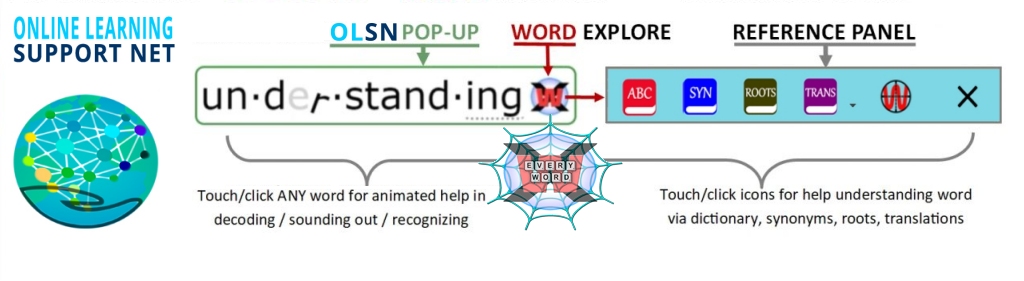 Note: Remember to click on any word on this page to experience the next evolutionary step in technology supported reading.
-----------------------------
Personal Background:
NOTE: We’ve always been uncomfortable including this interview and clip of Dr. Levine. We decided to include it in the hopes that what he is saying might be helpful (if only to those unaware of his crimes), and perhaps also helpful to those considering the Jeckle/Hyde relationship between the words of the pediatrician and the abuses of the man.
David Boulton: I always like to get started with understanding what’s driving somebody, where their heart and head align in driving them to do the work that they’re doing.
Dr. Mel Levine: Well, obviously, my work is really a deeply felt passion. But it’s also very much the continuation of a theme that’s preoccupied me, I think, as long as I can remember. When I was a little boy, I was fascinated with adults. My parents couldn’t get rid of me when they had company. I loved reading biographies and I just had a very strong focus on what happens to people over time. My latest book, Ready or Not, Here Life Comes, really focuses on an issue that has been an issue throughout my career. It’s one that no parent ever articulated, but the question everybody had when they came to see me which was, “How is he going to turn out?” It’s the turning out of somebody that I think has always been a fascination for me. I decided to be a physician when I was eight years old, before then having wanted to be a veterinarian.
As I grew up I began to merge this with my interest in what happens to people over time. When I went to college I was a premed but also a closet philosophy major and English major. I was very interested in philosophical questions about the meaning of life. I now believe I’m heavily immersed in the very practical issues of what’s going to be the meaning of somebody’s life. I know that sounds pretentious, but it’s very much what I’m involved in.
David Boulton: Learning is the very center of where the practical meets the profound.
Dr. Mel Levine: Absolutely, and I see that so vividly. Also, during the summers in college, I worked as a mountain climbing counselor in a summer camp and I loved it. I realized I really liked working with school-age children. I was fascinated by the differences, why some kids felt such agony climbing Mount Washington and others want to carry the heaviest pack, and what it was, how those differences played out among these boys and girls. Then in college I pursued pre-med. I also was head of a social services organization at Brown that did outreach into the community and community service became a real interest of mine.
After college I went to Oxford as a Rhodes Scholar and while I was there all of my colleagues were studying philosophy. I did some early medical work there but I was just constantly immersed in ethical and epistemological issues. Then I went to medical school and discovered that I was much more interested in vertical patients than horizontal ones; that ICU’s with catheters and stuff just wasn’t romantically attractive to me. I did okay with it. I also realized there was no way I was ever going to do anything in life that required working with your hands, that my hands existed mainly for cosmetic purposes. So, the surgical subspecialties were not an option for me.
Then I was an intern and I decided to go into pediatrics, partly because I had always been interested in this longitudinal view and I thought if I were in pediatrics I could be involved in chapter two of people’s biographies, called the “the school years.”
So, I pursued that all during my internship and residency and then I got drafted during Vietnam. I was sent to the Philippines on this huge military base, the largest base in the world called Clark Air Base and I was the base pediatrician. I became the school doctor and I thought it was incredible. We had 15,000 American children living on the base and I just saw enormous possibilities at the interface between pediatrics and education. It was there that I got really interested in child development and education.
Then I came back to Children’s Hospital in Boston, where I had trained at Harvard Medical School, and was put in charge of the outpatient department there so I could sort of polish my interest in vertical patients. I was amazed at how many of the kids we were seeing didn’t have traditional diseases but just weren’t functioning well. Their parents were being blamed and I didn’t think that was right, either. I thought that these kids were basic innocent victims of their own wiring and they were sort of ensnarled in their wiring and that with greater understanding we could get them out of these tangles. So, that fit very much with a lot of my previous philosophical background. You can see how all these strands really wove together in my career and made it such an authentic pursuit for me because it just pulled everything together and along with a lot of passion and energy.
Also, all my life I’ve been a rebel. I think I’ve only been to one basketball game at University of North Carolina. When I lived in Boston, I went to Cape Cod in the winter and in the summer I went to New Hampshire so there’d be no skiers around. I just have always been a loner and I’ve never been able to accept anything anyone has ever given to me. My father almost killed me because I told my Sunday school class I didn’t believe in God. He was so furious at me and the only reason I said that is because everybody else seemed to be believing in God and I just couldn’t stand being in a room full of people who had made up their minds about something.
I just desperately needed to be devil’s advocate. So, I got into my career and I immediately rejected ADD, LD, and all the D’s that my colleagues were talking about, dyslexia, and stuff, and thought that it was almost a human rights violation to call a kid a disease because of the way he’s wired. So, that has not enamored me to all the people who have gotten tenure doing research on ADD and LD, nor do the drug companies or the national organizations love Mel Levine very much. I’ve always been on the fringe and I feel most comfortable out there, in a way. I’m not trying to knock what anybody else is doing. I never do that. I’m just trying to say I’m presenting an alternative way of thinking about kids. Any field as complicated as this ought to have more than one alternative view and if you like this one you’re welcome to join me. That’s been my attitude all along.
David Boulton: No proselytizing, no selling, here’s what it is. You’re welcome to participate and learn your way into sync.
Dr. Mel Levine: Here’s what it is. You may or may not agree with this. You may only want pieces of this or you may want to oppose it. All of this is fine but I think I have the right to pursue the kind of intellectual pathway that I see is most fitting.
David Boulton: As we leave this section, give me a couple of bread crumbs on the people that were influential to you in epistemological work or philosophical work.
Dr. Mel Levine: Well, let me just say that I’m an existentialist and I was very influenced by Camus and Sartre and Nietzsche and Kierkegaard in college and beyond. This may sound a little bit odd, I’m also a worshipper of Robert Frost. I have many, many of his poems memorized because I believe there’s some philosophy in there that I very much believe in and every one of my books has quotes from his poetry. They were certainly strong influences on me and I honestly feel that I practice existential pediatrics because it’s very blameless pediatrics. It’s very sort of – the world is basically meaningless.
David Boulton: No faults.
Dr. Mel Levine: It’s like no-fault insurance. Therefore, we can’t blame anybody for our state but we’re also liberated in that way to become what we authentically need to be. So, I find it very liberating and sort of nondeterministic. There’s nobody running my life except me, which is an awesome responsibility but it’s also more fun.
David Boulton: So, did you encounter Korzybski in the epistemological work or Bohm?
Dr. Mel Levine: Yes.
Neurodevelopmental Profile:
David Boulton: It seems you’ve integrated a kind of ‘epistemological profiling’ with…
Dr. Mel Levine: Yes, exactly. So, what I call a neurodevelopmental profile, in a way, is an epistemological approach. I think the two main areas of philosophy that I’m focusing on in kids are really epistemology and ethics.
There are enormous ethical issues and moral issues that come up every day in my work, like do we have a right to change a kid or do we have a right to evaluate someone’s mind on the basis of how it performs other people’s specialties rather than its own?
David Boulton: And connected to that, as education starts to move in the direction of medicine as an organizing metaphor, via Flexner and other stimuli, we have to wonder whether or not – connected to the point you were just making – if we could just use “above all else, do no harm” as the ground of our educational ethics.
Dr. Mel Levine: Yes, I keep saying that to schools. And by the way, you mentioned medicine. What I see myself doing is taking some parts of the medical model and applying them in education. But not all of it, and in fact rejecting some aspects of medicine, such as labeling just because a lot of the pharmacology that goes on, such as the DSM, which is an anti-existential document. So, I’ve tried to turn my back on those things.
David Boulton: So, you want fluid, approximate profiling.
Dr. Mel Levine: But at the same time saying that medicine has some really superb processes embedded in it, like differential diagnosis. In the school very often a symptom is equated with a diagnosis.
As a pediatrician, if I see a baby who has a rash and a fever and is ten months old, a little list pops up in my mind saying here are the twelve most common causes of fever and a rash in a ten month old. I would like a school to be able to say, “A kid who is not handing in homework, what are the twelve possible most common reasons why a kid in seventh grade might not be handing in any homework,” rather than just saying, “He’s lazy.”
David Boulton: As filtered by other attributes of their profile.
Dr. Mel Levine: Exactly. And it’s that reasoning process. When I was in college I remember taking a course in the American Novel and I always remember the professor saying, “If you want to know what a novel is about you have to search for recurring themes that keep coming back in each chapter.” That’s how I go about trying to understand a kid.
What are the recurring themes that we see that tell us about his strengths and his weaknesses? And by the way, the one area in which we repudiate the medical model is that the medical model seldom even mentions anyone’s strengths.
David Boulton: Right. It’s all about identifying deficits, weaknesses and breakdowns – what’s wrong.
Dr. Mel Levine: Yes, what’s wrong. One of the reasons I object to labels is that labels don’t consider anyone’s strengths, which is more important to me. Because I really want schools and parents to have a mandate that says the most important thing you can do for a kid is to strengthen his strengths. And that doesn’t fit in either the educational model or the medical one. So, that’s a little about my philosophy.
David Boulton: That’s great. I really appreciate you taking the time to take me through that. I really like to start with some shared ground.
Learning: Affect and Cognition:
Dr. Mel Levine: It sounds like we may have some similar philosophical views.
David Boulton: Yes. I have had a different trajectory but through some similar spaces with similar concerns. Where I come from is there’s no higher organizing theme than “stewarding the health of children’s learning.”
Dr. Mel Levine: I certainly would agree with that.
David Boulton: And the next point is: above all else, do no harm.
Dr. Mel Levine: I always tell people that from the moment a kid gets up in the morning until he goes to sleep at night, the central mission of the day is to avoid humiliation at all costs.
David Boulton: Yes.
Dr. Mel Levine: And that humiliation is harm and it doesn’t cost any money to make sure that a kid is going through his day without being humiliated.
David Boulton: Well, you cut right to something that’s at the core of one of the most significant dimensions of our work, which has to do with the effect of affect on cognition, and in particular, the cognitive dis-entrainment that follows the shock of shame…
Dr. Mel Levine: Right.
David Boulton: And how debilitating and disruptive that is to whatever cognition was doing, with respect to a learning task. (see Shame Stories)
Dr. Mel Levine: We subject kids to levels of shame that no adult could ever tolerate.
David Boulton: Yes. Kiddom is much rougher.
Dr. Mel Levine: It really is a lot rougher. We have all kinds of ways of sidestepping shame. At any rate, I think we are on the same wavelength about these things. I also would like to put in a plug, not just the effects of affect on cognition, but the effects of cognition on affect.
David Boulton: Yes, we talk about it as the “affective-cognitive system.” Affect and cognition are like waves and particles.
Neurodevelopmental Constructs:
Dr. Mel Levine: I don’t know if you’ve ever seen it, but we have something called our neurodevelopmental constructs.
David Boulton: It’s one of areas I have questions about, yes.
Dr. Mel Levine: We have our “placemat,” which is this diagram like a chemist’s table of elements. And people always say, “Where are emotions on the placemat? You don’t have anything here about emotions.” I always tell them, “It’s a separate placemat, equally important.” But I try to keep separate the neurodevelopmental issues. I keep them separate long enough for us to look at them carefully because in the real world of schools and clinics and parents the emotional stuff becomes so compelling that it overwhelms the cognitive issues in their mind.
David Boulton: They don’t understand the interactive compensatory relationship amongst these various learning issues.
Dr. Mel Levine: If you’re chronically anxious it can affect your memory in school, and therefore, your test performance. If you have memory problems in school it can make you chronically anxious and depressed. It’s a two-way street and it keeps going back and forth. We’re also trying to get people away from saying which one is it mainly? Well, which caused which? It ends up just being something that exposes your biases.
We used to joke around about the fact that when we referred a kid to a clinician like a psychiatrist or a psychologist for services and you got a report back, you didn’t have to open the envelope. Just look at the return address and you know what the diagnosis is because people have their pet diagnoses. They call everybody depressed or everybody emotionally disturbed or ADD at the door.
David Boulton: Carpenters see nails.
Dr. Mel Levine: Anyway, that’s the background, that’s the backdrop, for better or for worse.
What is Learning?:
David Boulton: That’s very helpful. Now, let’s go into your definition of learning. The word learning, what does it mean to you?
Dr. Mel Levine: To me, learning is a kind of amalgam of two things: understanding and remembering. Then I could have some subheadings – maybe I should even say three things: understanding, remembering and utilizing. Schools, and many kids unfortunately, have come to think that learning is memorizing.
David Boulton: One of the things that it seems that we need most in this society is a reframe of the meaning of that word.
Dr. Mel Levine: I agree.
David Boulton: That it’s not just the ‘utility’ through which we acquire knowledge, skills and experience…
Dr. Mel Levine: Right.
David Boulton: It’s the process through which we extend ourselves into our lives in every way.
Dr. Mel Levine: Exactly. And, that’s where the utilization work comes in, on application. I’ve told high school teachers that I think every exam they give ought to be framed and put on the wall as their mission statement. If the exam is strictly a test of rote memory, so be it. That’s your philosophy of education. I don’t like exams but I think they’re a wonderful way to expose a teacher.
David Boulton: Yes. They say more about the system than they do about this “student.”
Dr. Mel Levine: Absolutely. The exam is so revealing in terms of the whole system in which a kid’s mind is being nurtured. You can just study the exams.
Learning Disabilities and Learning Differences:
David Boulton: So, having touched on learning, let’s explore the difference between learning disabilities and learning differences.
Dr. Mel Levine: Well, I have such a hard time with the concept of learning disability.
David Boulton: I do, too. I’m trying to draw you out about that.
Dr. Mel Levine: It’s because what’s a disability at one age could turn out to be a strength at another age. So for example, if you’re a kid who has a lot of trouble with subjects in school that have a tremendous amount of detail in them because your mind just balks at detail, you are a big-picture kid. You love conceptualizing and generalizing and speculating, and being creative and brainstorming but you can’t stand little details. We see a lot of kids like that. That could turn out to be a huge problem in terms of your reading scores when you’re a kid and it will also probably be the reason you’re the CEO someday. So, is that a disability or is that a difference?
Also, I’m convinced that many kids who are said to have learning disabilities have something else we really have to reckon with called highly specialized minds. In the adult world, the more specialized your mind is, the better. When you’re a kid, you’re supposed to be well-rounded. I think that’s a silly expectation.
David Boulton: Well, it’s an artifact of our system of education, yes?
Dr. Mel Levine: Absolutely. So, let me just quickly tell you, after I was on Oprah I got an e-mail from a mother saying, “Dr. Levine, I have to tell you about my nine-year-old son. Every day when I send him to school I feel as if I’m sending him off to jail. He has a lot of trouble with reading comprehension and has a lot of difficulty participating in class discussions because he can’t word his ideas fast enough and people have trouble reading his handwriting. He comes home from school upset and beats up his little sister and he cries himself to sleep every night. But I have to tell you one thing about him, he can fix absolutely anything that’s broken around our house and he’s an absolute genius with the things he can do with Legos.”
Who is that kid? Do we want to just have him grow up saying, “I’m LD.” You know, he’s going to thrive in a technological world someday if we don’t wipe him out and humiliate him before that. Then the question is: what is the school doing to strengthen his strengths and to celebrate those strengths or are they just going focus on the holes in his brain?
David Boulton: Which leads to the question: is there a necessity for a general core curriculum that we do expect children to become proficient with before or parallel to allowing them to differentiate into specializations?
Dr. Mel Levine: Yes. I think there has to be some core curriculum. I think we ought to say several things. One is that there’s a certain kind of set of background knowledge and skills that we probably want every citizen to have, if at all possible. We’ll call that core curriculum or something like that, that we think everybody would like to have or would need to have. And some are going to have a harder time having it than others.
You know, I can’t fix anything at all. That little boy in the story I just told you, he can fix things, but fixing things isn’t part of the core curriculum so he’s going to be discriminated against. And I, who always was a terrific verbalist in school, got all the kudos and was not called learning disabled.
David Boulton: The schools are heavily biased towards recognizing and working with verbal intelligence and stunting everything else.
Dr. Mel Levine: Schools love linguists so I thrived in school. Everybody hopes that I had learning problems in school but I didn’t. You know, I’d make a better story if I was, but I really did quite well in school and didn’t have any academic trouble.
The other thing about learning disabilities is how do you decide what’s a learning disability and what isn’t it? Is a problem with time management a learning disability? What’s more important than a spelling problem?
David Boulton: My understanding of this is that there’s a general consensus that about five percent of the population has some innate or neurobiological/structural difficulty that translates into what we call learning disabilities, (Wendorf, Lyon Shaywitz), and that we don’t know that from genetic signatures or telltale early neurobiological evidence, but rather we back into that number from how many people we can’t reach with our current methodologies. But they also recognize that the mechanisms through which they’ve come to these definitions are crude and more political than they are scientific.(See Wendorf Postscript)
Dr. Mel Levine: Yes, which I would agree with. And they’re in a position where they have to worry about that, and I’m not. I don’t want to get into the position where I have to worry about that. I want to help kids and I want to do things for kids that don’t depend on legislation, that don’t depend on money.
I want parents to learn how to help the kid with time management problems. I want teachers to address these issues. So, I think my goals are broader than theirs. And by the way, Reid Lyon and Sally Shaywitz and those people have done a really superb job of studying phonological awareness and some of the breakdowns in reading. They’ve done the best research that’s been done. So, I’m not a critic of theirs. I’m just on a different…
David Boulton: Yes, and I think that as good work as they’ve done, it’s in only in a few of the many dimensions that are co-implicate in this issues we need to understand.
Science is Always Changing:
Dr. Mel Levine: If I am running a clinical program or I’m training teachers around the United States and a particular kid has trouble with pattern recognition and everything in school is really falling apart because he has trouble recognizing patterns that keep coming back again, I really can’t say to the parents or tell the teachers to say, “You know, we are terribly sorry, but that hasn’t been studied yet. If you come back in maybe ten or twelve years, I think it will be addressed.”
Medicine has never had the luxury of saying that. The other thing is there’s this worship of research at the moment and it’s so interesting. Because when you read the literature, and I always keep up with the research literature, it is so contradictory. Virtually everything that has been proven today, five years from now they’re going to be some articles showing that we were wrong.
So, if at any point the research people stand up and say, “Here’s what we’ve shown,” as if it’s never going to change and as if it’s hard truth, that’s just not the way science works. It’s funny, because the people who are the most dogmatic about it are the people who in a way are not scientists. Reid Lyon isn’t a scientist. He will tell you that. But you’re sort of relying on science to defend yourself and we just have to be humble about the science of all this, too, which I think probably he is and Sally is. But science changes all the time and there are new developments. Studies keep contradicting previous studies and that’s going to happen with all the stuff they’ve done. It’s already starting to happen.
David Boulton: Right, and science, despite its advantages in methodology and orientations at times, is still populated by human beings.
Dr. Mel Levine: And it changes. We don’t have any time in medicine when we can say we have demonstrated for sure that X-phenomenon is caused by that, and then three years later we find some other causes for it or we find out that we were wrong.
David Boulton: Every time I think of science in this regard, I recall Lord Kelvin pronouncing in the 1890’s that students needn’t concern themselves any further with physics, it was all done.
Dr. Mel Levine: That’s right. There’s that funny implication when you go before Congress and say, “We’ve done the research on reading. We now know what causes reading disabilities. We’ve identified where the breakdown is.” And saying what Kelvin was saying, “It’s done.”
You know what? I promise you, five or six years from now there’s going to be a spate of studies contradicting everything they’ve found. That’s not to blame them or criticize them. That’s just the way medical progress and scientific progress work. But you don’t say that in front of a congressional committee.
David Boulton: It’s the the blind men and the elephant story.
Dr. Mel Levine: Yes.
Philosophy of All Kinds of Minds:
Dr. Mel Levine: So, here am I and I’m running a nonprofit institute called All Kinds of Minds. We’ve raised seventy million dollars in the last ten years to train teachers and clinicians in our approach.
David Boulton: And you raised that from foundations and organizations who care about your mission?
Dr. Mel Levine: Absolutely, through private philanthropy. It gives me and my colleagues tremendous independence, in a sense, to say, “Let’s let our institute be a clearinghouse of the best research and the best knowledge. Let’s do the best stuff we can do in terms of clinical issues and educational issues that haven’t been well researched. We can’t pretend they’re not there; we’ve got to respond to them today. So, let’s give it our best shot. Let’s not get wedded to anything. Let’s be willing to change when new findings come out.” And we’re trying to be a kind of clearinghouse, an unbiased clearinghouse for what’s known about learning and differences in learning.
David Boulton: I really respect and appreciate that.
Dr. Mel Levine: I’ve always told people I’m not wedded to anything. You know, if the stuff we’ve been teaching teachers about a certain aspect of memory turns out to be wrong, we’re going to apologize and change it.
David Boulton: Yes, but my sense is that you’re not so much pushing a corpus of knowledge that you want people to behave in relationship to, as much as you’re trying to help inspire and develop and inform a different kind of lens, a different orientation from which to participate.
Dr. Mel Levine: That’s one hundred percent correct. So, it’s a lens where you look for recurring themes. Where you don’t label anybody. Where you’re humble about who is normal and who is abnormal. Where you’re willing to say that a kid is quirky and eccentric rather than that he has Asperger Syndrome, which is my least favorite designation.
I just think it’s so sad that we’re not allowed to have any more eccentric kids. They’re all going to be classified in the DSM. So, there’s a philosophy there and there’s also a sort of system to reasoning, for problem solving built into this. But the knowledge base itself is entirely changeable.
David Boulton: It’s provisional scaffolding.
Dr. Mel Levine: That’s exactly what it is. It’s tentative scaffolding. We’re trying to avoid what Alfred North Whitehead once called the fallacy of misplaced concreteness. This is where you use an abstraction for so long, you forget that it was…
David Boulton: You forget that it’s an abstraction.
Dr. Mel Levine: Right, and that happens with IQ and it happens with a lot of other things.
David Boulton: Yes, the things that become the big memes.
Dr. Mel Levine: That’s right. By the way, I think this is more fun.
David Boulton: What’s that?
Dr. Mel Levine: You know, being willing to deconstruct everything you construct.
David Boulton: It seems to me that it’s essential. Again, once we say that stewarding the health of their learning is more important than a particular thing that we’re trying to teach them…
Dr. Mel Levine: Yeah, and in education, people love to dichotomize. Like should it be phonics or should it be whole language? And I say why can’t it be both?
David Boulton: Yes, both of which, by the way, are gross approximations to compensate for irregularities in a technological artifact.
Dr. Mel Levine: Right, but schools want to adopt one system. I always tell people can you imagine what it would be like if I said I’m a pediatrician and I run an Amoxicillin practice?
David Boulton: It seems that we are breeding the learning out of teachers.
Dr. Mel Levine: Absolutely.
David Boulton: We have not created environments in which we’re bringing forth first-person learners as teaching practitioners. We’re developing robotic extensions of mechanized protocols of dispensing and training.
Dr. Mel Levine: That’s right. I agree. Now, you’re doing this documentary…
David Boulton: Yes. We are currently set up to come to your farm in March.
Dr. Mel Levine: Good. You will love the farm because the animals on my farm represent many of the same things we’re talking about.
David Boulton: They’re archetypes of the different modes of learning?
Dr. Mel Levine: Yes, absolutely. And we emphasize individuality among them. So, it’s a lot of fun.
David Boulton: In closing, what do you think are the insights, the jewels of understanding and orienting our relationship to children most missing in the general behavior of parents and teachers?
Dr. Mel Levine: It’s not something I’d want to give a glib answer to. I’d like to be thinking about that. If you want to ask me that during our interview I can respond to it. I have a couple of immediate responses, but I’d like to refine them because it’s such a key question.
David Boulton: Okay. Well, let’s leave it rest here.
Part 2 – Video - At Sanctuary Farm:
—- Sanctuary Farm Outtake —-

Dr. Mel Levine: Brunehilda, you’ve had enough! [Brunehilda is one of Dr. Levine’s many horses] She’s awful. She’s our newest resident, and our most arrogant. “Yeah, you big shot.” It’s strange, I gave her that name originally and it’s so perfect for her. I had to give a talk a couple weeks ago, and I went down to check the animals before I left. She came up to me and I petted her and she bit me on the cheek. I had this bloody wound and I went up to New York and I had to explain to everybody that it was a horse bite. It was terrible. No one believed me.
Spectrum of Reasons for Differences of Minds:
David Boulton: What are the spectrum of reasons or causes for the variations of differences that we have as minds?
Dr. Mel Levine: Well, you know, as a pediatric existentialist, I never ask why. I don’t know why I am the way I am. And in fact, I think schools, and sometimes clinicians and others, waste an enormous amount of time asking the why question. Is it genetic? Is it because she had all those ear infections as a baby? Is it the parents’ fault? Is it the school’s fault? I would rather we divert as much of our thinking and resources as possible to very precisely understanding how somebody is, rather than speculating on the why question, which you can never prove or disprove in an individual case anyway.
David Boulton: Okay. I respect and appreciate that and there’s a growing push going on to understand that a lot of the variations in children’s school readiness are consequences of the learning environments they’re growing up in in the home.
Dr. Mel Levine: Yes.
David Boulton: And by understanding that some degree of this differences or variations in their readiness as they enter school are coming out of there, it gives us some incentives to rethink that.
Dr. Mel Levine: Sure.
David Boulton: So, we’re not looking for why as in first causes but some distribution across the spectrum of some of the things that are affecting the development of our ability to learn from the time we’re born.
Dr. Mel Levine: Well, I don’t deny the importance of environmental issues and cultural issues and family issues in shaping a mind. I think the fascinating thing is to see the interaction between the two, between someone’s environment and early learning experiences on the one hand, and that basic wiring that individual was born with, and how that’s going to be conditioned over time. I think we have to keep combining nature and nurture. I think we have to realize that children who are exposed to some kind of intellectual atmosphere, who can see the romance of acquiring knowledge, are in a much better position to learn effectively than those for whom somehow learning doesn’t fit in any context and seems somewhat irrelevant for them.
I so vividly remember when I was about four years old, my brother and sister coming home from school and opening the mail and reading what was in the mail. I was so intensely jealous that they could break the code and that I could never figure out what was in those envelopes. I had the sense there were all kinds of secrets there and they could find out the secrets, and because I couldn’t read I had no way of accessing that secret information. It really intensely aggravated me when I was four years old and I couldn’t wait to learn how to read. I also watched my father read the newspaper every night and talk about it, and reading seemed to be romantically attractive that all the incentives were there. It happened in other academic areas as well. I think we have to really emphasize to the parents that somehow they have to cultivate an appetite for skill and for knowledge as soon as possible in life.
David Boulton: This relates to our phone conversation and teachers as well – what they are calling forth in children and whether they are themselves kind of going through the motions, or alive with some first-person learning that’s more contagious.
Dr. Mel Levine: I think if you buy your kid educational toys, I think if you emphasize educational experiences but you’re not modeling them yourself, I think it’s a very half-hearted effort. I think if a family is going on vacation in two months they should be doing research on the place they’re going on vacation to and they should be doing that along with the kid, no matter how old he is. Let’s find out more about this place. Let’s read about the things we can go see. That way the parents are really demonstrating some enthusiasm and all the fun and romance that occurs with using your skills.
Spectrum of Learning Differences:
David Boulton: Earlier I asked you a question about what might be some of the reasons forlearning disorders. Rather than going into the reasons, let’s talk about some of the spectrum of differences you’ve identified and that you’re working with.
Dr. Mel Levine: I think there’s a much wider spectrum of differences in learning than we ever thought. I think it’s a mistake just to focus on reading and believe somehow that how someone reads is the total revelation of their wiring. I think there are so many other aspects to differences in learning that have real long-term implications, ranging from how fluently a person is able to speak to how well a person can read faces and pick up social feedback cues to relate well to other people; the ability to manage time and organize materials; the ability to brainstorm and think critically; the ability to engage in evaluative thinking, sort of critical thinking. There are enormous differences between kids in their capacities to mobilize these different areas of performance that are going to relate to school success and beyond that.
So, I think I, probably more than most other people, have a much broader definition of what a learning disorder might be and what the differences in learning might be. It’s one reason I have trouble labeling someone and saying he’s LD and another person is not LD because I include all kinds of differences in learning in my area of concern for an individual.
Ripple Effects of Reading Difficulty:
David Boulton: Despite our focus, we agree that reading isn’t the end-all, be-all of learning. Our greater concern is what is happening to the mental and emotional processing infrastructure in children that experience protracted reading difficulties. Sixty-eight percent of young people are below proficiency in reading and the numbers are pretty bad across all social economic spectrums. These are children that are under water to various degrees and, because of the context they’re operating in, they come to feel like there’s something wrong with them because they’re not doing this well. That has some translational or transfer effect into other areas of learning.
Dr. Mel Levine: Yes.
David Boulton: So, it’s not just the positive things about reading, it’s the negative collateral things about reading difficulty. Do you see that connecting to any of the things that you’re doing?
Dr. Mel Levine: I think I do see some very interesting ripple effects when kids are not acquiring reading skills. For example, it might be that a particular child in fourth grade is having difficulty keeping pace with reading comprehension or with decoding and because he’s having trouble with reading he hates to read, and when he does read he gets almost nothing out of it because he’s reading very passively. And because he’s reading very passively he’s not able to use reading as a way of building his language abilities.
So, what oddly happens is that his language problems caused his reading problems, and his reading problems are now causing much more aggravated language problems. Those language problems, in turn, are going to make it hard for him to follow directions, communicate well with other people, and even use language inside his mind for some verbal mediation. Verbal mediation is the process through which you regulate your behavior and feelings by talking to yourself. And believe it or not, a lot of kids with language problems really don’t use language as a way of regulating themselves.
What does that mean? That means they’re much more vulnerable if someone offers them cocaine to take that cocaine. They get in trouble, they get depressed because they don’t have a voice inside that says, “Yeah, I could take that medicine, I could take that drug from that kid and he’d think I’m a cool dude. But oh, if I take it I could like wreck my brain and I could get addicted, and my mother will kill me if she finds out, and I could get arrested.” All of that comes out of language, that sort of verbal conscience that’s guiding you.
So, if you go all the way back to the language problem and say, yeah, it’s causing a reading problem, and the reading problem is causing a language problem, and the language problem is causing a behavior problem, and the fact that this kid can’t read and other people around him can read much better is eroding his self-esteem and making him feel pretty worthless. He better find other guys in town who have the same feelings and have similar reading difficulties, together they can form a gang or a cult, get in trouble, act macho, and form their own society that really is going to be self-destructive and cost our society a lot. Those are the ripple effects.
Language and Reading – Environment and Wiring:
David Boulton: I really appreciated your last response. Let’s go back to language and reading. Clearly, like Hart-Risley and others have shown, the language that children are exposed to in their families is a critical exercise environment for their minds. They’re exercising vocabulary, which is necessary for the reading system to ‘play’, and they’re also developing phonemic awareness – the differentiation of speech sounds. So, early language is exercising the development of the infrastructure that reading depends upon.
Dr. Mel Levine: Let me say, to begin with, that we have to realize that there’s also a contribution of someone’s innate wiring. You can have two kids growing up in the same family, in the same deprived environment, one of whom is two years ahead in reading, and the other of whom can’t break at code at all. So, you can’t totally blame poverty or poor environment for reading difficulties because as I said, two kids growing up in the same can differ dramatically in their reading abilities.
David Boulton: Which means we have to get a spectrum of distribution to see the weighting factors across the spectrum that children are experiencing…
Dr. Mel Levine: That’s exactly right.
David Boulton: To be able to determine the probable distribution of effects.
Dr. Mel Levine: I think it’s important to realize that poverty is going to have it’s most deleterious effects on wiring that was a bit weak to begin with; that it will bring out someone’s vulnerability. But if some kid is beautifully endowed for language, even in a deprived environment he can become a reader.
The other thing I want to point out is I think sometimes we tend to overemphasize phonology and phonemic awareness as the key to all reading. I mean, the research that’s been done in phonology and phonemic awareness is extraordinary. I think it’s the best research that’s been done in our field. On the other hand, there’s a tendency sometimes to think that that’s the mechanism for all reading problems.
We see some kids, I just saw a boy yesterday in fact, who had difficulty reading because he can’t deal with linear chunks of information, anything that comes in a linear chunk. If you watch them spell, they get the first two letters right and the last two letters right and mess up the middle. Many of them are very good artists when it comes to gestalt and configuration, but they have trouble remembering patterns that are arranged linearly. In our clinical work we have met an awful lot of kids who have superb phonological awareness, excellent phonemic awareness, and they can’t read. So, there are other mechanisms, although it may be the phonologic one is the most common.
The other thing we see are an awful lot of kids who can decode but can’t comprehend well. They really didn’t have a lot of trouble with word identification but they’re having big trouble with reading comprehension, especially in middle school and beyond. Some of these are students who read in a very passive mode. While they’re reading bells are not ringing in their minds. A really good reader, when he reads something, should be getting into a dialogue with the author. Things should be resonating. There should be, in a sense, a very active process going on. We have a whole bunch of kids whom we see who are passive processors and they’re getting nothing out of reading because they process everything passively, particularly things that have language in them. But they have good phonological awareness.
There’s another group of kids who have trouble with what we call saliency determination; that when text gets particularly large they can’t sort out what’s important and what isn’t important. They can’t do it in math either and they can’t do it in a lot of other areas of their lives. They have trouble really teasing out key ideas, key words. They feel overwhelmed when they read. I hear from a child like that, “I get to the end of the chapter, and I have no idea what I just read.”
There are also kids who have trouble with reading because they have trouble relating what they’re reading to their prior knowledge and experience. So much of reading comprehension involves access to what you already know and comparing the new stuff to what’s already there. And for some kids, that’s exceedingly difficult. They may be having trouble remembering math facts, too. We always look at what else is affected as a way of coming back and explaining the reading breakdown.
We also see kids who have trouble understanding what they read but they’re forgetting what they’re reading while they’re reading it. We call that an active working memory dysfunction. As one little girl told me in a TV show we made, she said, “Every time I read a sentence, it erases the one before it.” So my job as a clinician is to take a kid that’s not reading, and say where is the breakdown occurring? Is it the phonological level? Is it some sort of a pattern recognition issue? Is it a process of passive reading? Is this a kid who can’t engage in saliency determination? Is this a child whose basic sentence comprehension is so weak that he can’t understand sentences when he reads them? He doesn’t really perceive the effects of word order on meaning and grammatical construction, and how all that works. Is it a kid who doesn’t have prior knowledge or doesn’t have access to prior knowledge that he really does have, but he can’t access it fast enough and in a precise enough way while he’s reading?
So, I think the issues with reading are complex. There’s sometimes a tendency in this field to oversimplify things and equate, which we would never do in medicine, equate a symptom with a diagnosis. Can’t read? Must be phonological. I would say it might be phonological.
Cause and Effect – Prevention and Treatment:
David Boulton: Excellent. Back to the early beginnings of what you just shared, we’ve talked to a number of neuroscientists so far and they can’t tell the difference between processing difficulties caused by innate wiring and processing difficulties caused by or reflecting ‘wiring’ acquired during development in relation to their environments. (Shaywitz) They don’t have a handle on the difference between innate inheritance and developmental-environmental learning.
Dr. Mel Levine: Right.
David Boulton: Which feeds into what you were saying before.
Dr. Mel Levine: My argument would be that it doesn’t matter.
David Boulton: Except that it may help us as a society, as families and as schools to recognize that a great degree of suffering is a consequence of impoverished learning environments children are growing in.
Dr. Mel Levine: Right.
David Boulton: That we have a greater responsibility because so much of the variation is reflecting us.
Dr. Mel Levine: Sure. If I see a kid who doesn’t express himself well, he has trouble with oral language and I speculate could it be because he comes from such a poor environment, he really may be impoverished, could it be for some other reason? It’s not going to affect my treatment. I’ve got to build his oral language skills because it’s causing him a lot of difficulty that he has trouble expressing himself.
On the other hand, I saw a little girl in Harlem who was having a lot of trouble with expressive language in middle school. After we evaluated her and found that she was a really bright kid who had so many strengths, really good spatially, good socially, fantastic motorically, had all kinds of strengths in her profile but getting thoughts into language, particularly literate school kind of thoughts was really hard for this girl. Well, I met with the principal of the school, and I explained to him what her problem was. He leaned back in his chair and said, “Mel, that’s terrific. I’m glad you helped us with her.” He said, “But guess what?” I said, “What?” He said, “You just described seventy percent of the kids in this school.” And I said, “What are you doing about it?” He kind of shrugged his shoulders and I said, “Well, if I were you, I would just have a major campaign in this school emphasizing loads of oral presentations and we’re going to build those expressive language muscles. We’re not going to write these kids off and say they’re supposed to have expressive language problems.”
So, I think when it comes to looking for the mechanism for something, it has preventive implications rather than therapeutic ones. It has policy implications rather than clinical ones, in a sense. So, if I see a student, I’ve got to diagnose what specific breakdown in language production she has. Is it word finding? Is it sentence formulation? Are there some articulation issues? I’ve got to really pinpoint where her language breakdown is and work on it. I don’t think I have to go back and speculate could it be her mother’s fault, her father’s fault, her early childhood? In her case, I just want to fix it.
On the other hand, if we had a group of kids, if seventy percent of kids in a school are having trouble like this then we want to say what are we doing in our culture and in our society that we can do something about to foster these critical abilities of verbal expression? Then we might say we need to start early. So, I think understanding the mechanisms has tremendous preventive and policy implications and curricular implications for all kids.
David Boulton: Excellent. That’s exactly the distinction we’re operating on. And so we respect that yours is a clinical and therapeutic view and ours is a policy and general awareness view.
Dr. Mel Levine: You know, I once gave grand rounds at a major medical school and I was talking about learning problems. They invited the superintendent of schools in that community to attend my grand rounds. At the end of my session he got up and addressed all these doctors, and said, “I suddenly realized the difference between Mel Levine and people like you doctors and me.” He said, “You guys get paid to think about individual children, and I get paid to think about groups of children.” He said, “Let’s put those two together and come up with some implications.”
So, I’m going to keep thinking about individual children because I’m a clinician. I want to understand how we help individual kids. But I’m also willing to back off and get into dialogue as I’ve been doing recently with congressmen, with other policy makers, school board members, legislation writers, and so on. I’ve been very actively involved in that recently, to say, okay, here’s what we’re seeing that has very high prevalence. What are the implications for prevention, for preventing not only these problems but the complications that arise from these breakdowns?
Reading:
David Boulton: Good. I want to take us back for a quick step through the discussion we had about reading. The phonological research has brought out the criticality of sound. Well, clearly we know that somebody who is taking off and reading well is not reading at the speed of sound anymore. They’ve kind of broken the sound barrier.
Dr. Mel Levine: Right.
David Boulton: But in the beginnings, the transcription system has to bring forth an internal experience of language, spoken language, as a takeoff bridge…
Dr. Mel Levine: Right.
David Boulton: So, there’s a phase in which learning to read depends on prior language learning. But in our conversations with people that work on that edge, one of the things that’s clear is that the kind of sound distinctions the brain has to learn to make in order to map print to sound are different than the kind of sound distinctions the brain has to develop in order to engage in oral language.
Dr. Mel Levine: Right.
David Boulton: At a different order, the normally speaking child who can hear and speak and function very well in the oral dimension can have trouble going into reading because of the artificial distinctions, in relation to the technology, that must be learned.
Dr. Mel Levine: Right.
David Boulton: This is pretty far a field from your work but I thought I’d ask your opinion about it: when we look at the speed of processing, on average, the brain has about twenty-five milliseconds to turn letters into sounds. (Rayner) When we look at the juggle of processing this code, resolving its ambiguities and confusions, and creating the sounds that produce this virtual experience of language – one assembled at such a rate – we are looking at a very complex – unnaturally complex – challenge.
Dr. Mel Levine: Right.
David Boulton: There’s so many variables, like you were saying, that can present themselves in a number of ways. Reading requires the development of mind-infrastructure that can process the code and produce this virtualization. If something goes amiss in the formation of that infrastructure, it’s going to radiate out into more and more language processing issues and into many of the subsequent problems that you were talking about relative to their ability to reflect on or remember. All of these things can be, in some respects, downstream reflections of misformed infrastructure at the core.
Dr. Mel Levine: Right.
David Boulton: Having said that, is there some aspect that lights up for you that you too speak to that says something similar?
Dr. Mel Levine: I would really agree that that infrastructure for reading needs to be present, that people go through critical periods when certain kinds of perceptions, certain kinds of internalizations are occurring. As you mentioned, certainly during the early stages of reading acquisition, even a little before that, the programming of the language sounds becomes critical.
At any rate, I would certainly agree that these basic language sounds, all kinds of things can spin off of them, especially when that’s not being internalized by a child. In the mildest forms, for example, you can find a kid who has mild difficulty with phonological awareness, who has a little bit of trouble but not much trouble learning how to read. But then his parents move from Mexico to El Paso, Texas, and he’s having a huge amount of trouble doing well in school in El Paso. Why? Because he never fully internalized the Spanish sound system and now he’s having a huge amount of trouble superimposing a second sound system over a first one that never got all the way in. That’s a very common problem in immigrant kids who are bilingual and it shows you how this has major ramifications since we have so many bilingual children now. When we go back and look at the way they were in their first country, many of them were not very good linguists with their native language.
My only bias is that I, in my research and teaching and program development and so on, look way beyond reading. Reading is just one aspect of performance, in my opinion. It’s certainly a vital one, but it’s not the only one. If a person can’t read well but has terrific artistic and social skills, that minimizes the impact of the reading problem. So, I don’t like to think that reading is the end-all and really the only way to be a winner in one’s intellectual life because I encounter an awful lot of kids whom I’ve now watched grow up who have been extraordinarily successful and still aren’t very good at reading.
So, I think it’s important not to blow it out of proportion, and in particular, not to say that if reading goes well everything else will go well, and not to believe that the only important developmental issue we have to be examining is how well kids can read. I would argue how well they can organize, how well they can brainstorm and generate ideas, how well they can relate to other people are going to be more important in life than how well they read. I’m not putting down reading, but I worry sometimes when reading becomes considered sine qua non of competency in school.
David Boulton: I appreciate that distinction. Our primary concern in the work that we’re doing is what we call “stewarding the health of our children’s learning.”
Dr. Mel Levine: That’s right.
David Boulton: As if how well they’re learning, how well they’re participating from the inside-out is what’s most important.
Dr. Mel Levine: Yeah, but you know, some of these people at NICHD and all these places – and they’re friends of mine – are very narrowly focused. The reason they’ve made such a contribution is because they are narrowly focused. But I’m a wide-angle lens and I can’t afford to do that. This has happened in the learning disorders field over and over again. We go through these decades – this is the decade of phonological awareness. I assure you pretty soon someone is going to come and erase most of this and say, “No, they used to believe phonological was key. Before that it was other aspects of language. Before that it was visual processing and everything was visual spatial.” And the truth is, all these things are correct.
David Boulton: I think the more implicate argument that’s going to emerge in the next decade has to do with asynchrony and process time.
Dr. Mel Levine: That’s right. Sort of Paula Tallal’s stuff?
David Boulton: Tallal’s ‘temporal deficit’(1) is about timing but more phonological in bias than asynchrony. I’m talking about disambiguating the concurrent streams of information in time to sustain the cycles of attention.
Dr. Mel Levine: Right. And we might find that phonology is secondary to that.
David Boulton: Yes, exactly. But like I said, the central intention is not about reading. However, reading is an artificially confusing learning challenge – it’s different than the challenges of nature or talking with parents. In natural learning situations the child’s whole bio-evolutionary inheritance, proprioceptively, sensorially, provides a feedback loop to learn in that’s different than the kind of artificial environment they are in when they hit the wall with reading. (analogous to an Insidious Curriculum)
Dr. Mel Levine: Absolutely.
David Boulton: And yet this reading thing intermixes with language and fundamentally how they feel about confusion.
Dr. Mel Levine: Let me just say there are other things that can interfere with language. I mean, I’m very interested in math deficits. I’m fascinated with kids who can’t write and the effects of writing upon thinking. So, there are a lot of other similar and alike.
David Boulton: Right. And if we’re going to talk about spelling, reading, and math, we’re talking about artificial codes. We’re talking about conventions of behavior that don’t have natural roots like the other things children are wired to do better when they hit the wall with these confusions.
Dr. Mel Levine: Absolutely. Good work.
David Boulton: Thank you.